

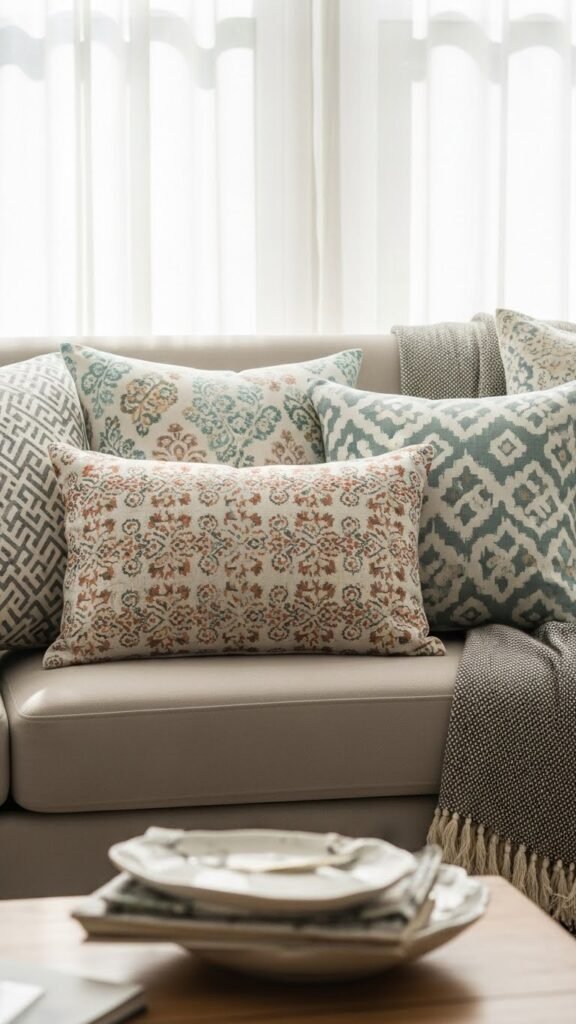
Living rooms often feel stuck when décor stays the same for too long. Pillow covers offer an easy way to change the mood without repainting walls or buying new furniture. Small swaps can shift color, texture, and comfort in minutes. This guide focuses on pillow covers that work with real homes and real budgets. Each idea helps you update seating areas using simple choices that feel warm, practical, and inviting.
1. Soft Linen Neutrals
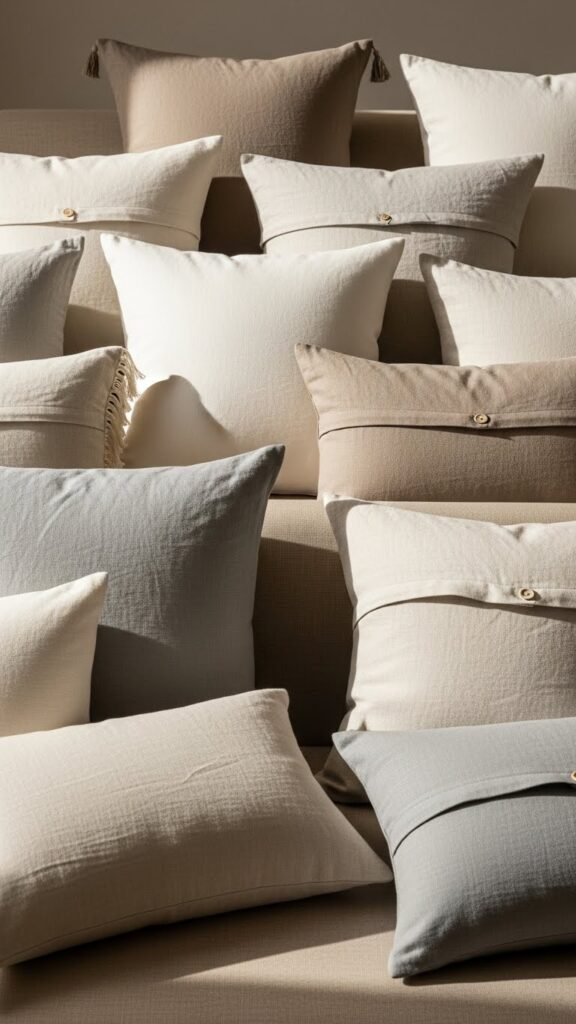
Linen pillow covers in soft neutral shades fit almost any living room. Think sand, oat, or light gray. These colors work well with wood floors and simple sofas. Linen has a relaxed texture that makes seating areas feel calm and lived-in.
Budget tip: buy covers instead of inserts. Keep one set of inserts and rotate covers through the year.
DIY option: pre-wash linen fabric and sew envelope-style backs. Straight seams are enough.
Style idea: mix two tones of the same color to avoid a flat look. Place darker shades at the corners and lighter ones toward the center.
Care tip: wash gently and air dry to keep the texture soft.
2. Subtle Floral Prints
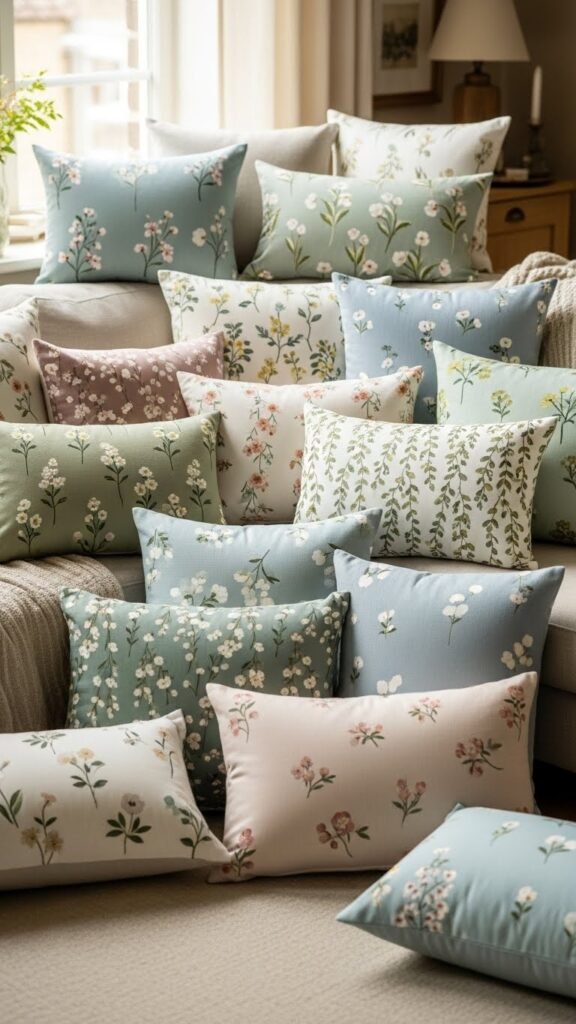
Small floral patterns add charm without overpowering a space. Choose prints with thin lines or faded colors. These work well in family rooms and reading corners.
Budget tip: look for fabric remnants with floral designs. Many stores sell small cuts at lower prices.
DIY option: use iron-on backing to turn fabric into simple covers with no sewing.
Pairing idea: place floral pillows next to solid ones so the pattern stands out gently.
Use lighter florals for spring or summer and darker prints for cooler months.
3. Textured Cotton Weaves
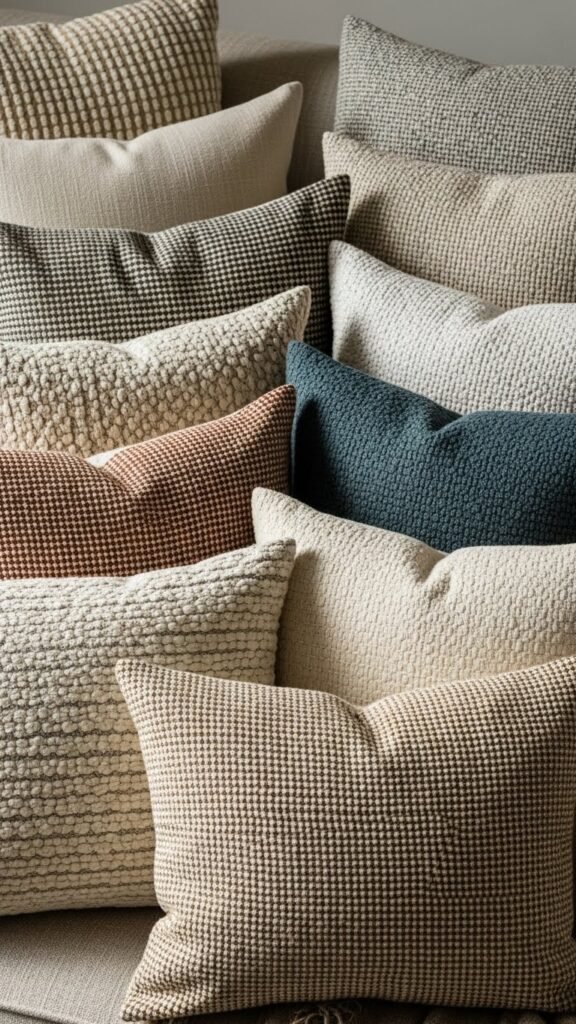
Textured cotton covers add depth through touch rather than color. Raised weaves and stitched patterns bring interest to simple furniture.
Budget tip: check clearance racks for textured covers in neutral tones. Texture hides wear well.
DIY option: stitch lines or shapes onto plain cotton covers using thick thread.
Placement idea: use textured pillows on solid sofas where contrast matters most.
These covers suit both casual and tidy living rooms.
4. Warm Earth-Tone Covers
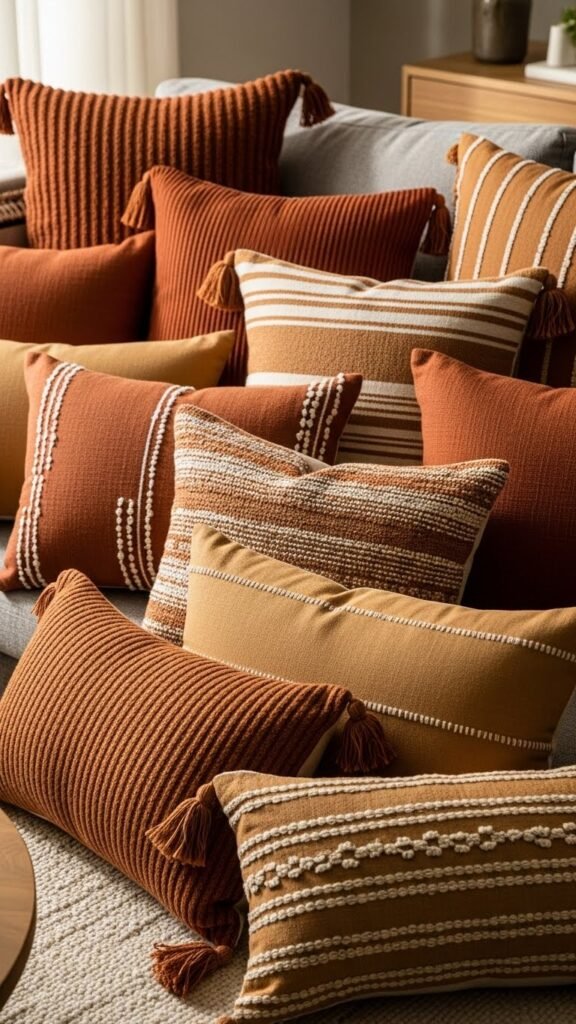
Earth tones like rust, clay, and tan create warmth without loud color. They pair well with leather, wood, and woven rugs.
Budget tip: buy one earth-tone cover and rotate it among rooms.
DIY option: dye light cotton covers using fabric dye for custom shades.
Style tip: group three tones together for balance. Avoid using too many shades at once.
These colors hold up well across seasons.
5. Minimal Line Patterns
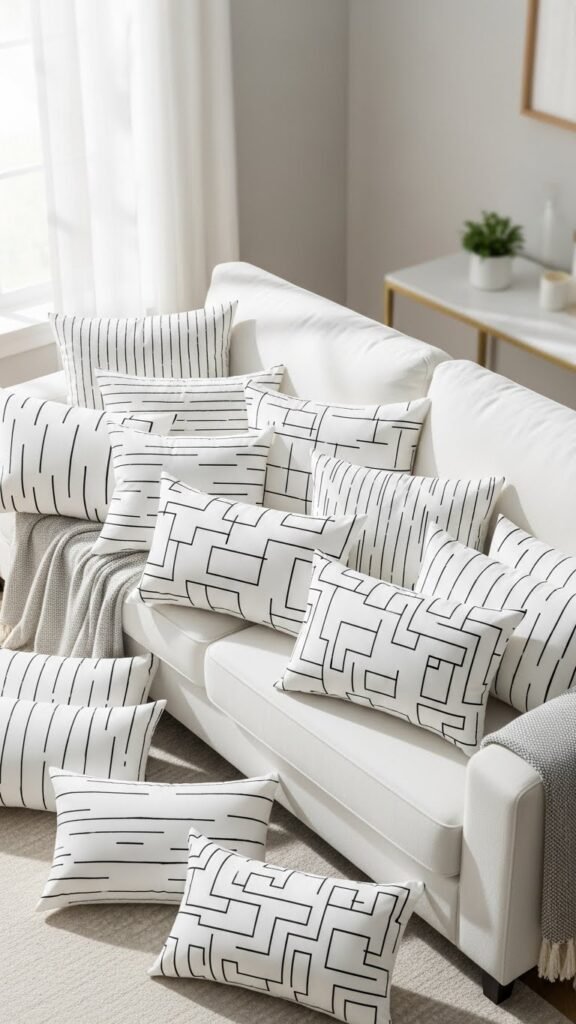
Thin line patterns add style without clutter. Black or dark lines on light fabric feel modern and calm.
Budget tip: stencil simple lines onto plain covers using fabric paint.
DIY option: tape straight lines before painting to keep edges clean.
Placement idea: use these pillows in rooms with clean furniture shapes.
They work well with neutral walls and simple décor.
6. Cozy Knit Covers
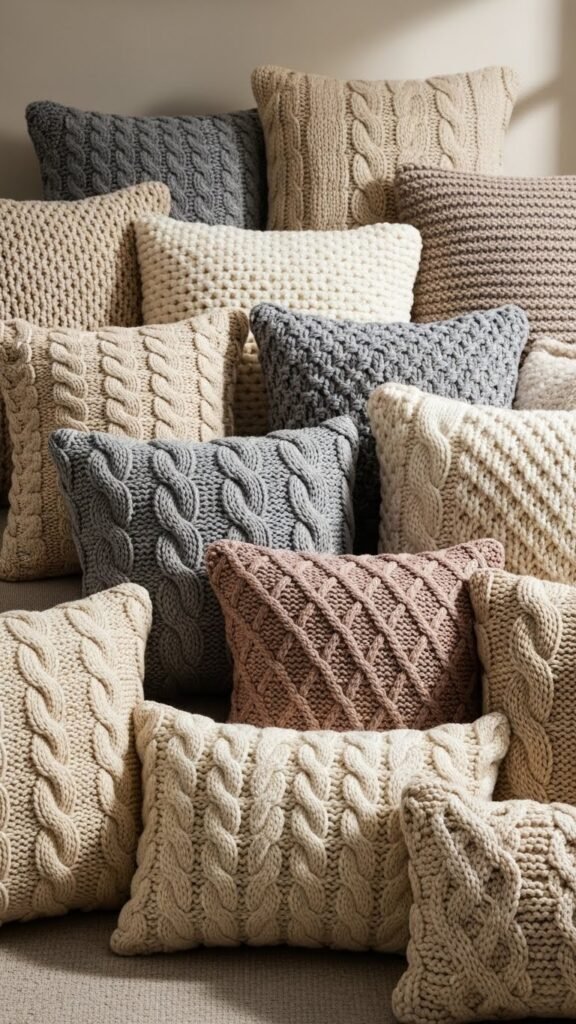
Knit pillow covers bring comfort through texture. They work well in cooler months or reading spaces.
Budget tip: thrift old knit sweaters and turn them into covers.
DIY option: sew sweater pieces into envelope covers.
Style idea: keep colors simple so texture stands out.
Knit covers pair well with soft throws and low lighting.
7. Classic Stripe Designs
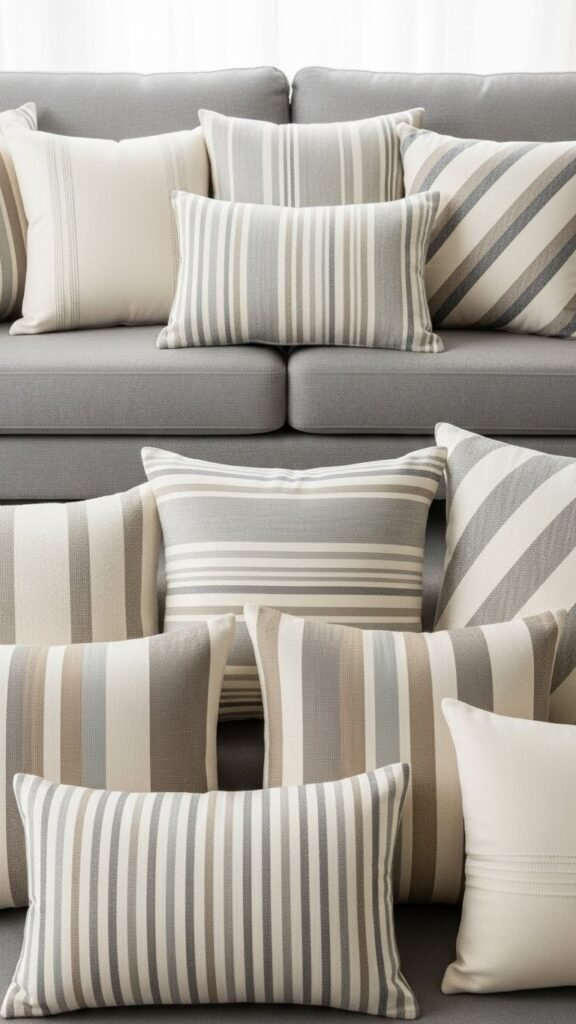
Stripes guide the eye and add order. Thin stripes feel subtle, while wide stripes feel bold.
Budget tip: choose neutral stripes so covers last longer in style.
DIY option: use fabric tape and paint to create stripes.
Pair stripes with solids to keep balance.
These covers suit both casual and tidy living rooms.
8. Soft Velvet Touch
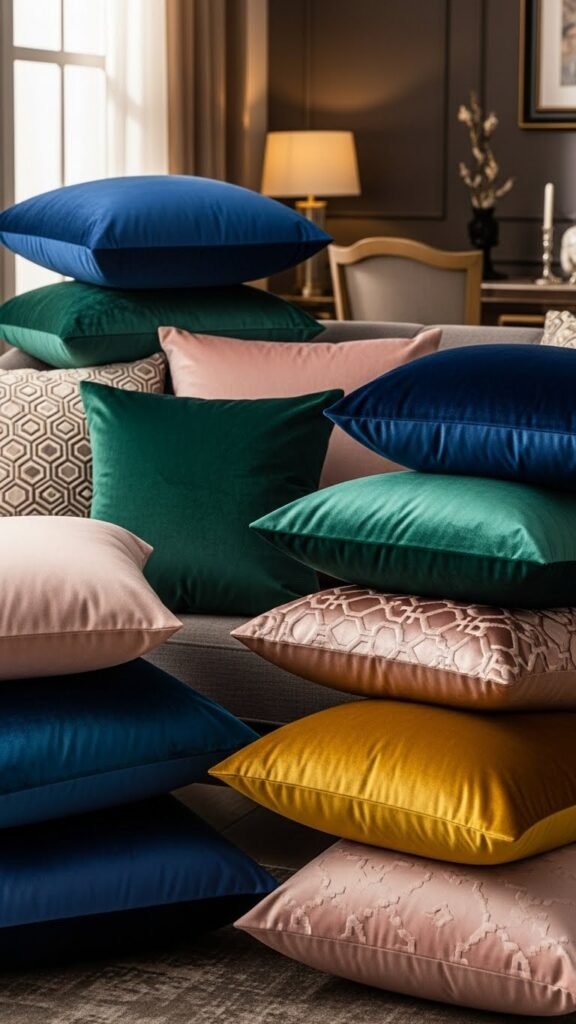
Velvet covers reflect light softly, adding comfort and warmth. They suit evening spaces well.
Budget tip: buy velvet covers in darker shades to hide wear.
DIY option: repurpose velvet curtains or table runners.
Placement idea: use two velvet pillows as accents among cotton covers.
Keep colors muted for everyday use.
9. Neutral Block Prints
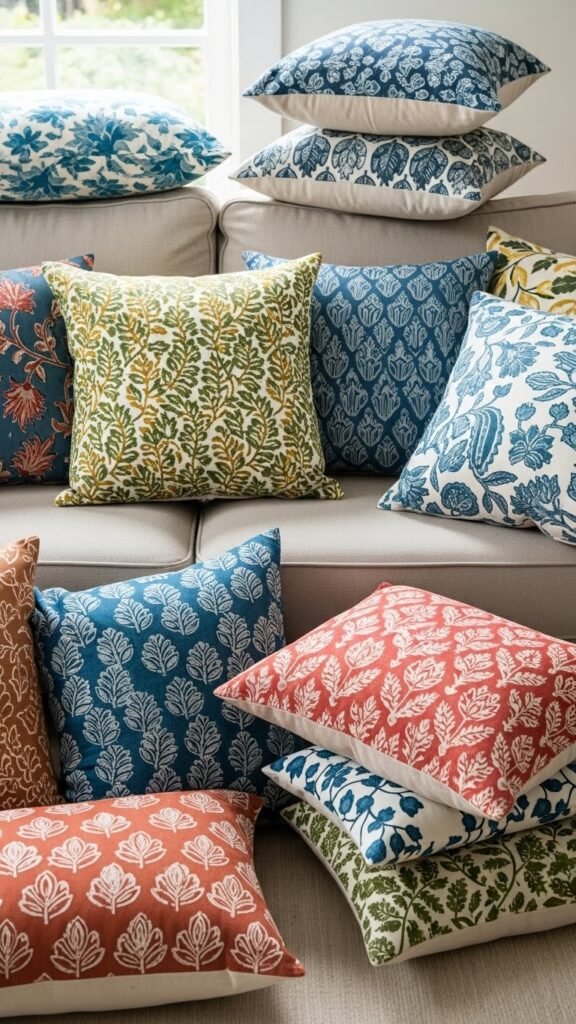
Block prints add character through handmade-style patterns. Neutral inks keep them calm.
Budget tip: buy covers with simple repeats rather than detailed scenes.
DIY option: carve simple stamps from foam and print at home.
These covers work well in relaxed living rooms.
10. Soft Pastel Covers
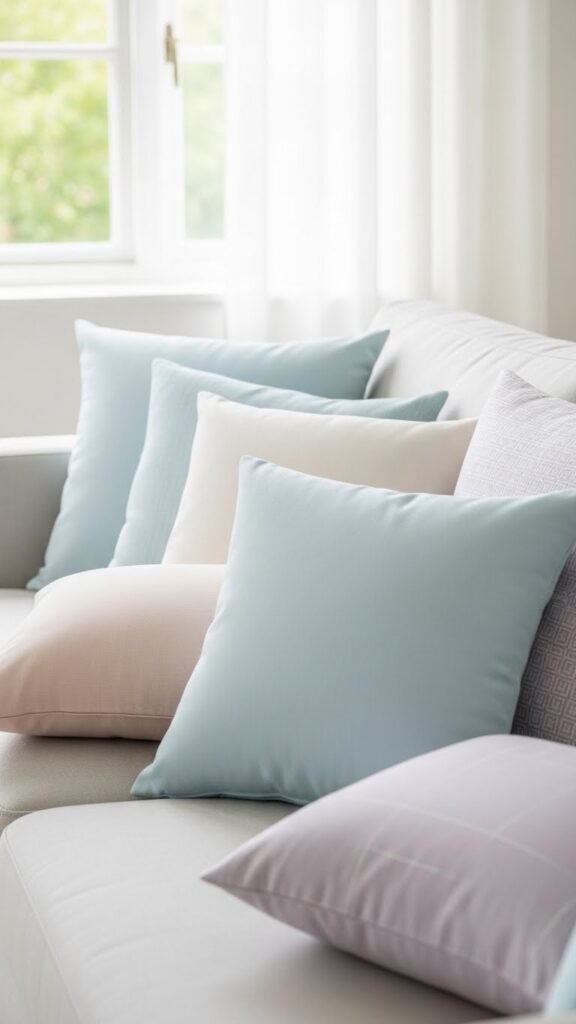
Pastels add light color without feeling loud. Choose dusty tones rather than bright shades.
Budget tip: buy covers in one pastel family.
DIY option: lightly dye white covers using diluted dye.
Pastels pair well with light wood furniture.
11. Faux Fur Accents
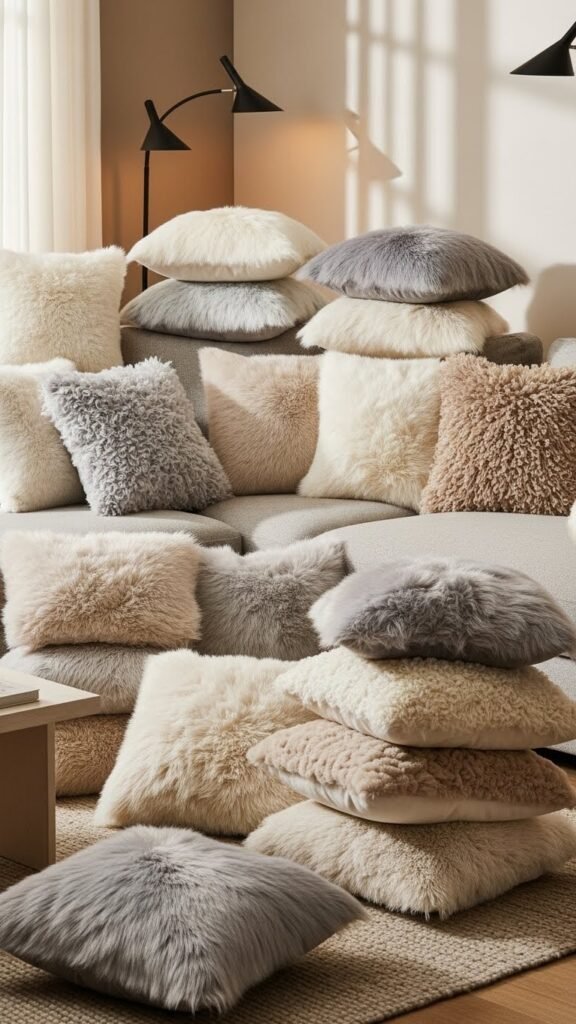
Faux fur covers add warmth through texture. Use them sparingly.
Budget tip: choose smaller sizes to limit cost.
DIY option: wrap faux fur fabric around existing pillows.
Great for cozy corners and winter months.
12. Monochrome Prints
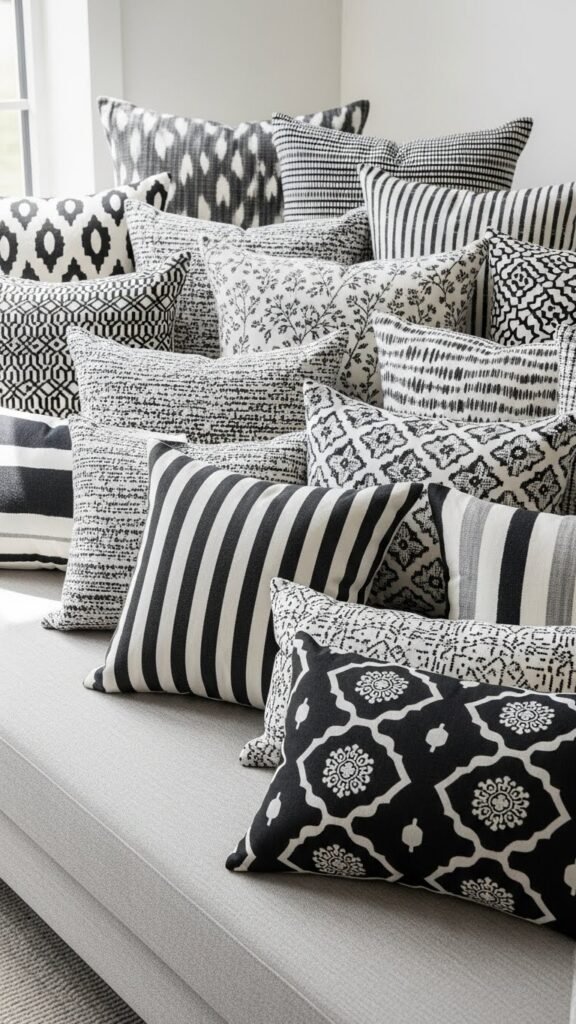
Black and white covers keep rooms balanced. Patterns add interest without color clutter.
Budget tip: rotate monochrome covers year-round.
DIY option: paint simple shapes on white fabric.
They suit modern and classic spaces.
13. Soft Tassel Details
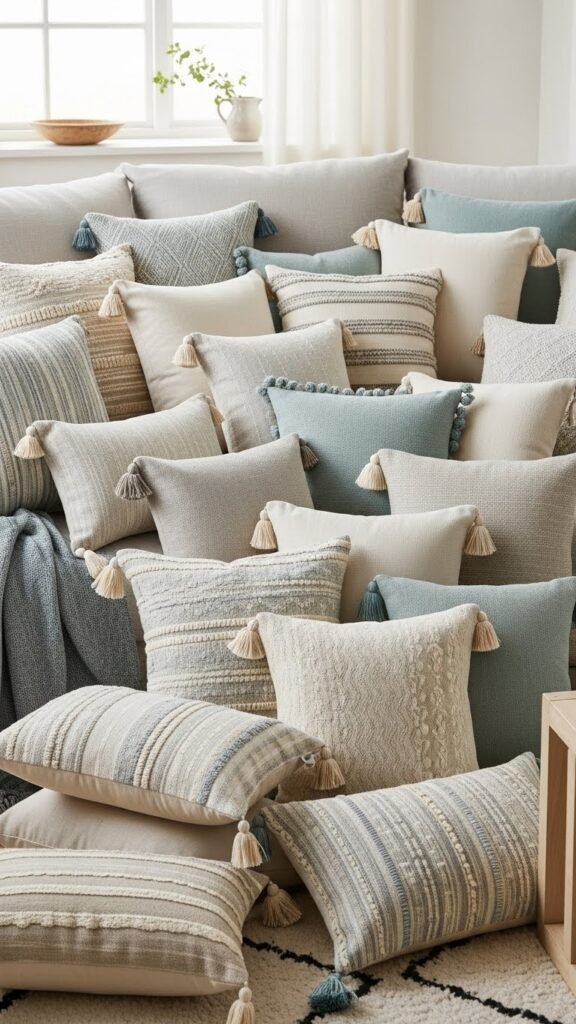
Small tassels add detail without fuss. Choose short tassels for daily use.
Budget tip: add tassels yourself to plain covers.
DIY option: sew tassels at corners only.
They add charm to simple rooms.
14. Muted Plaid Covers
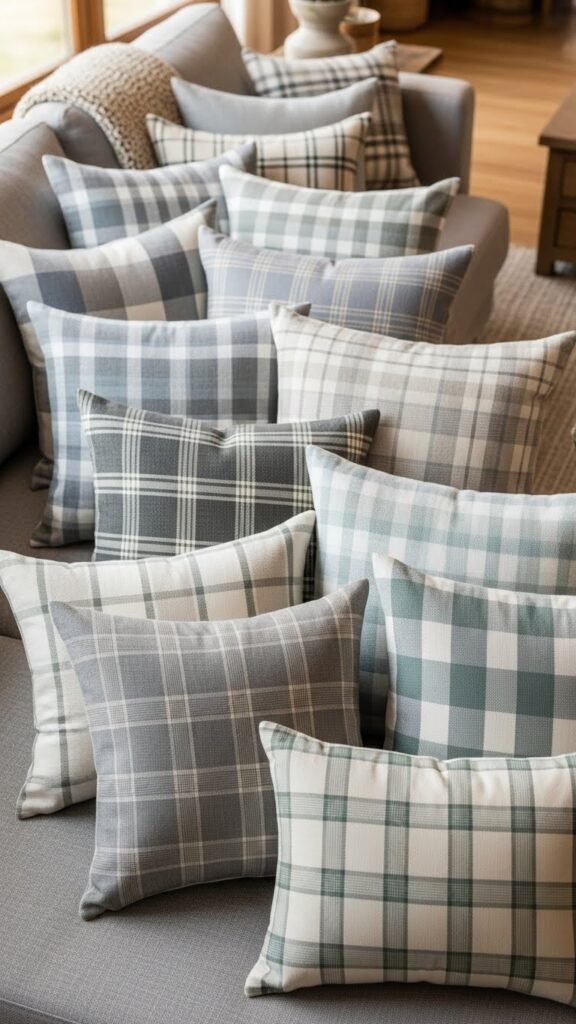
Plaid brings structure and comfort. Muted colors keep it relaxed.
Budget tip: reuse old shirts for fabric.
DIY option: patch plaid fabric into covers.
Works well in family spaces.
15. Embroidered Motifs
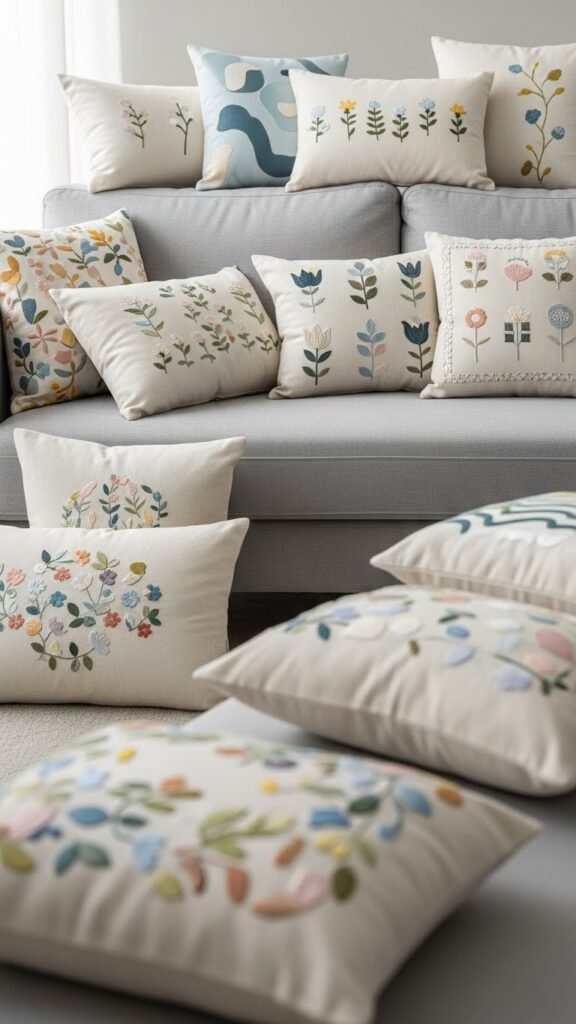
Simple embroidery adds personality. Keep designs small.
Budget tip: embroider only one side.
DIY option: use basic stitches on cotton covers.
Great for handmade touches.
16. Natural Canvas Covers
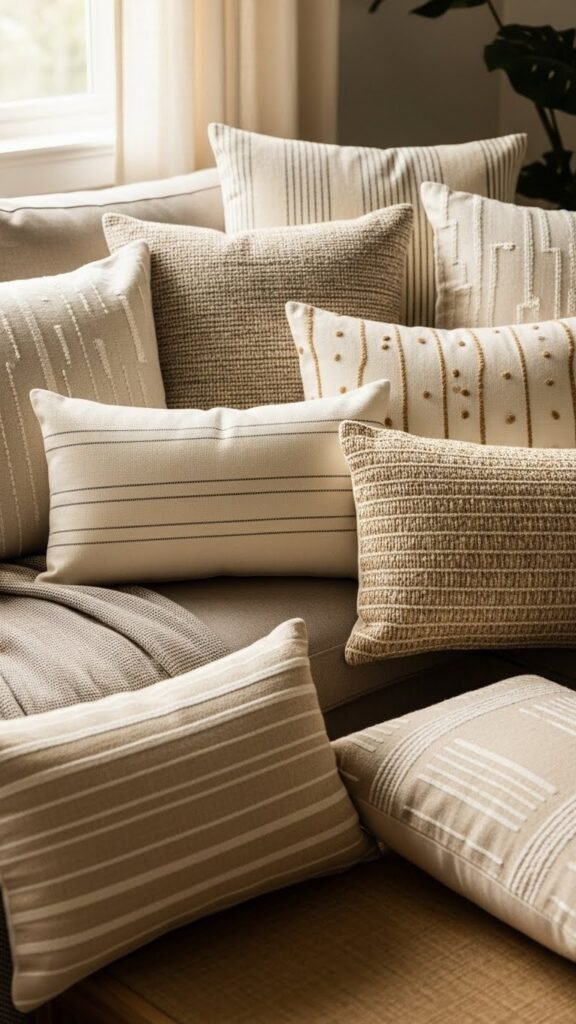
Canvas covers are sturdy and simple. They suit busy homes.
Budget tip: canvas lasts longer, reducing replacements.
DIY option: use drop cloth fabric.
Pairs well with neutral rooms.
17. Soft Ombre Shades
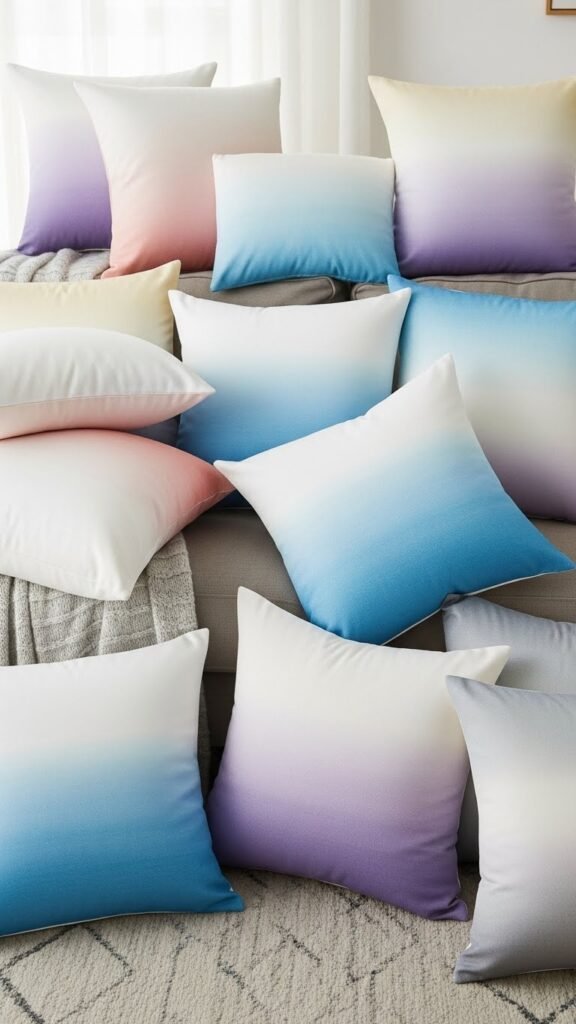
Ombre shading adds interest through color flow. Choose gentle fades.
Budget tip: buy one ombre piece as an accent.
DIY option: dip-dye fabric slowly for soft fades.
Works well on plain sofas.
18. Simple Patchwork Styles
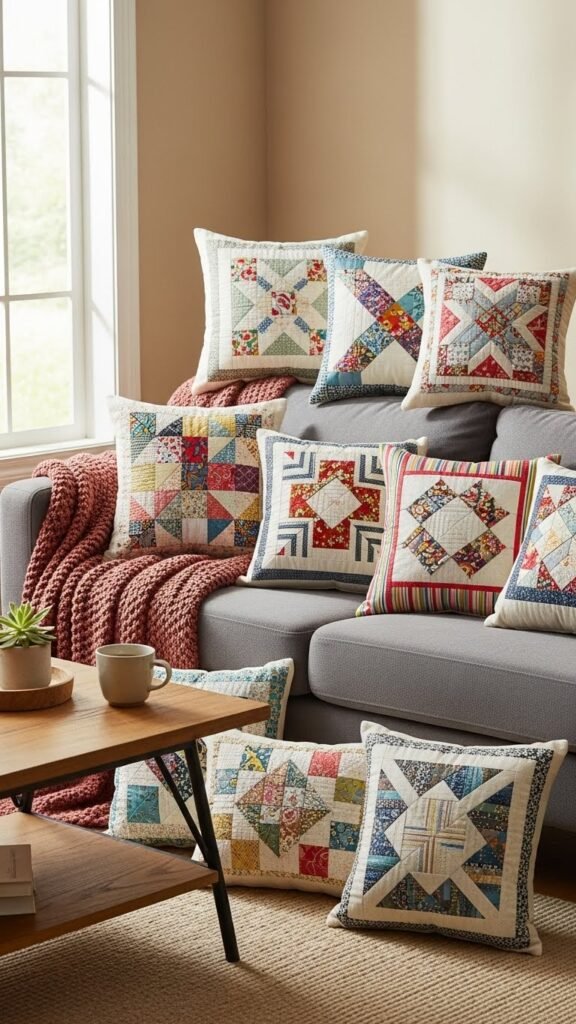
Patchwork uses small fabric pieces. It’s great for leftovers.
Budget tip: use scrap fabric.
DIY option: stitch squares together.
Adds warmth to seating.
19. Soft Neutral Stripes
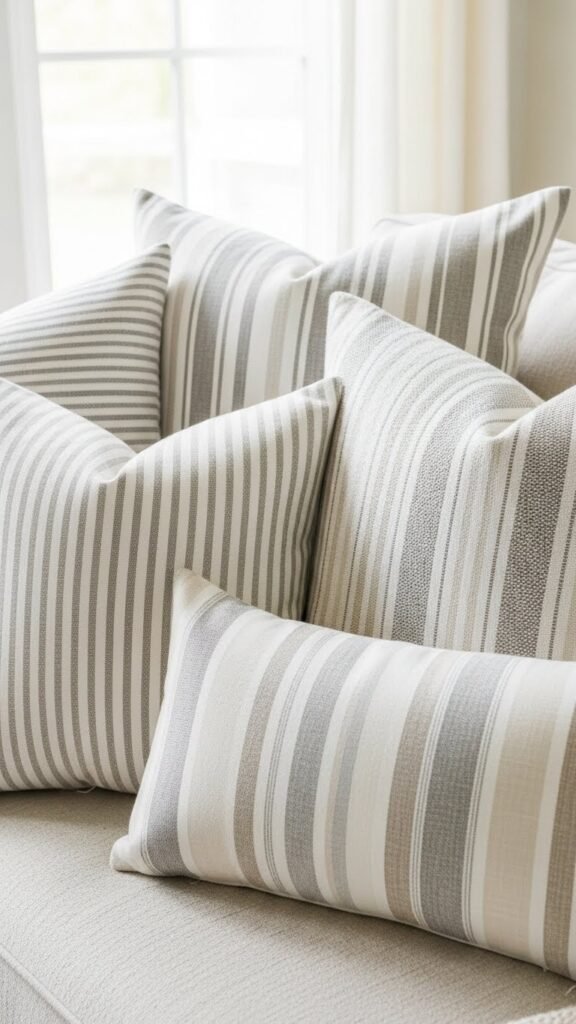
Neutral stripes keep rooms calm. Thin lines work best.
Budget tip: paint stripes yourself.
DIY option: use masking tape.
Good for everyday use.
20. Woven Fringe Edges
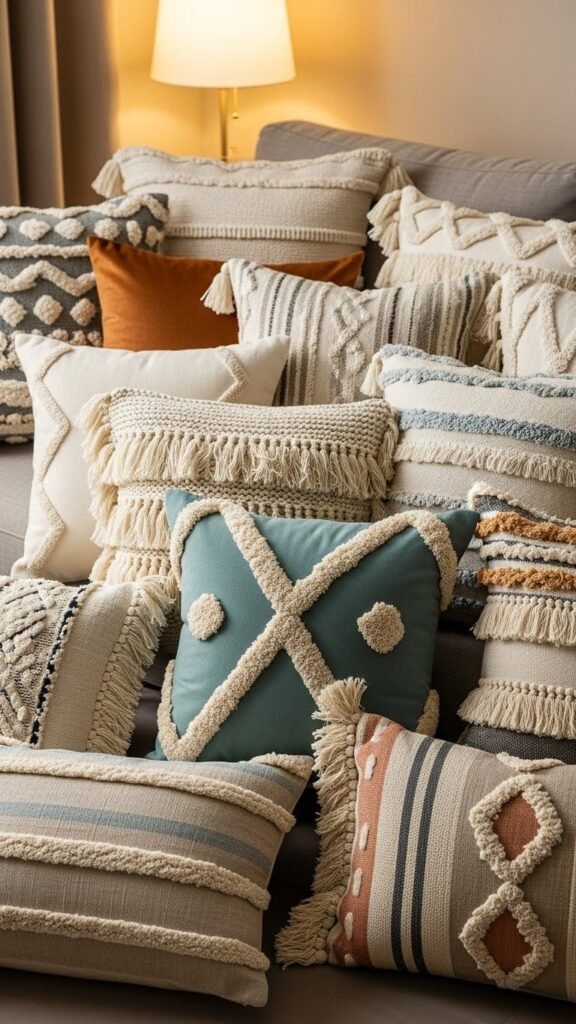
Fringe adds movement. Keep it short.
Budget tip: fringe trim is low cost.
DIY option: sew fringe to edges.
Adds charm without clutter.
21. Light Denim Covers
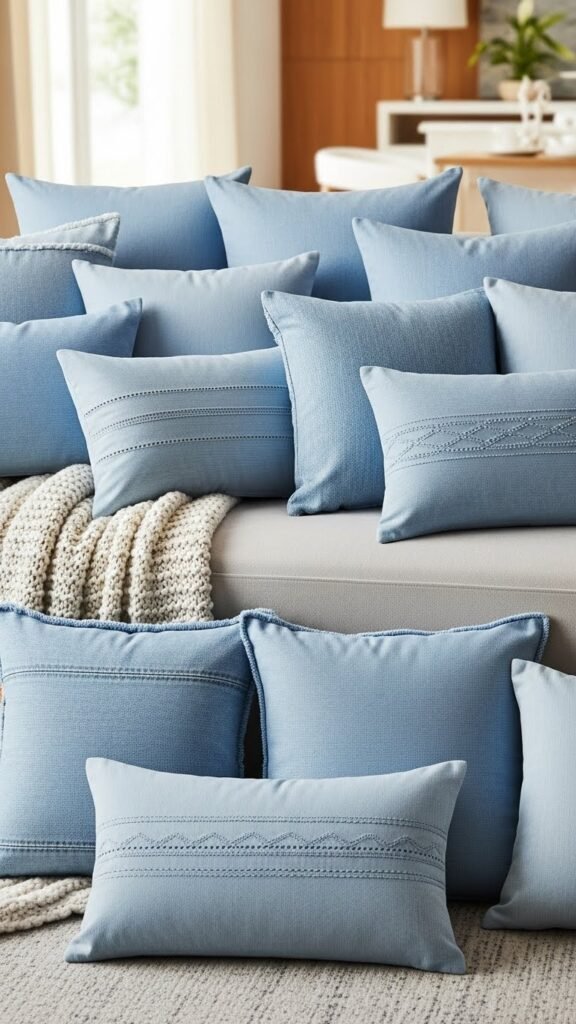
Denim covers are durable and relaxed.
Budget tip: reuse old jeans.
DIY option: sew pockets onto covers.
Works well in casual rooms.
22. Soft Quilted Covers
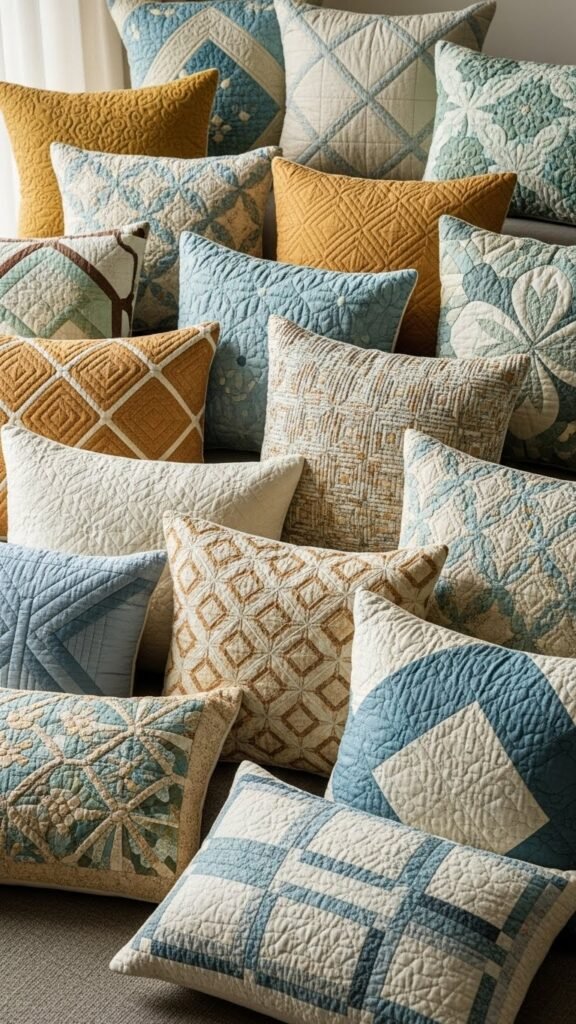
Quilting adds comfort through stitching.
Budget tip: use thin batting.
DIY option: stitch straight lines only.
Great for family seating.
23. Simple Two-Tone Designs
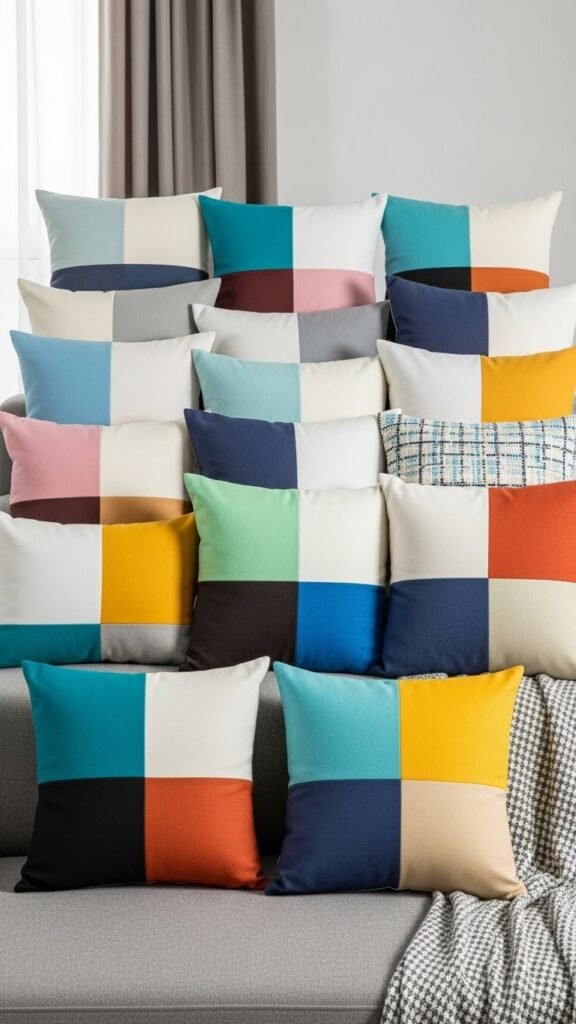
Two-tone covers add contrast without patterns.
Budget tip: sew two fabrics together.
DIY option: split colors evenly.
Works well in modern rooms.
24. Soft Boho-Inspired Covers
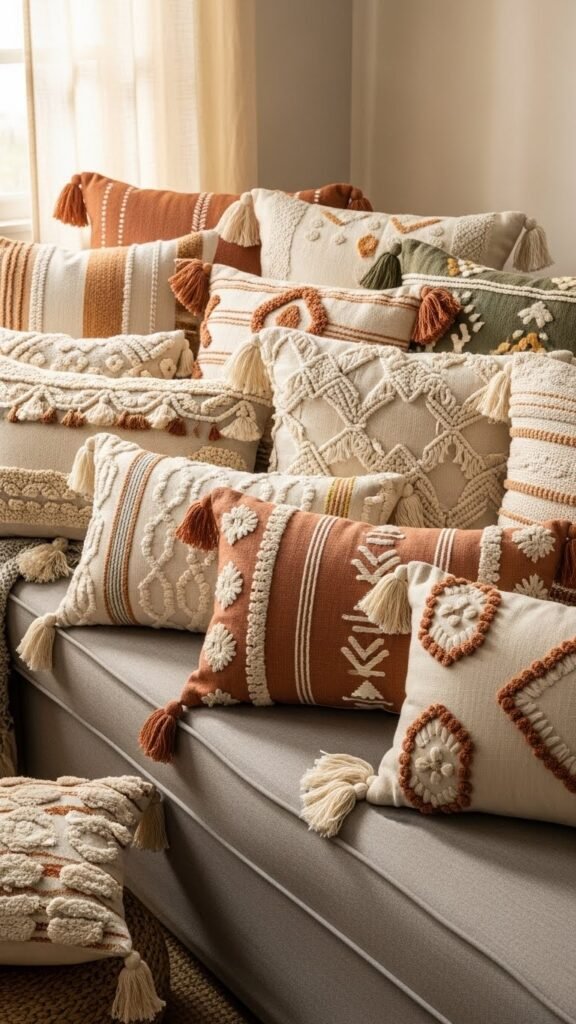
Boho styles focus on texture and gentle patterns. Keep colors calm.
Budget tip: mix thrifted fabrics.
DIY option: add simple stitching.
Pairs well with plants and wood décor.
Conclusion
Pillow covers offer a simple way to shift the feel of a living room without large spending. By mixing texture, color, and pattern thoughtfully, seating areas feel more inviting and personal. Choose a few styles that suit your space, rotate them through the year, and try easy DIY ideas when possible. Small changes like these keep living spaces comfortable and visually interesting every day.

Leave a Reply