

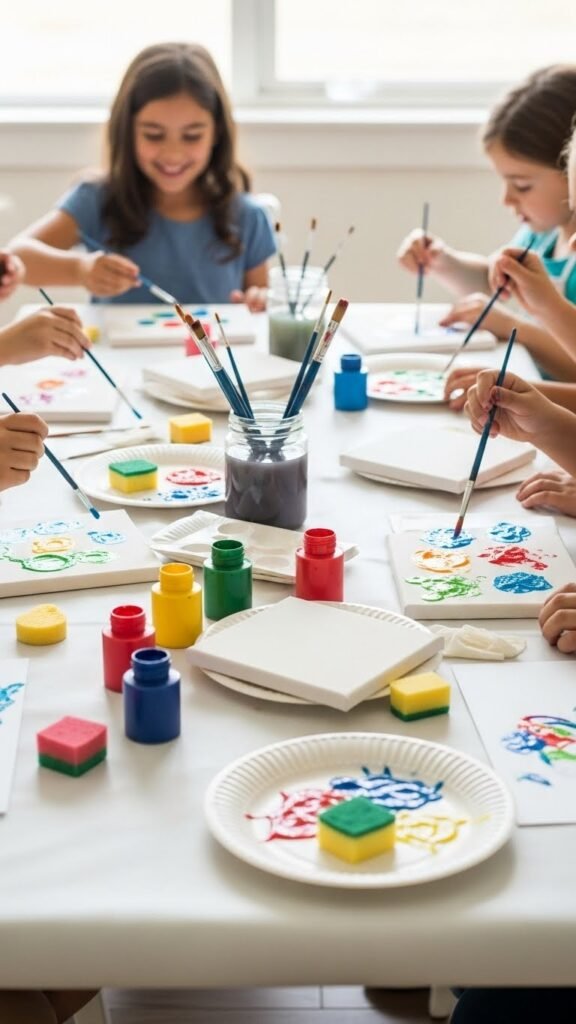
Painting projects give kids a simple way to stay busy, curious, and focused. These ideas work well for afternoons, weekends, classrooms, or rainy days at home. Each project uses easy materials and simple steps. Most supplies can be found at home or picked up on a small budget. The goal is not perfection. The goal is hands-on fun, color play, and time spent creating together.
Below you’ll find paint projects that keep attention strong without feeling overwhelming. They are flexible for different ages. Many can be finished in short sessions. Some invite repeat play with new colors or tools. Pick one or two, set up a washable space, and let kids take the lead.
1. Paper Plate Animal Faces
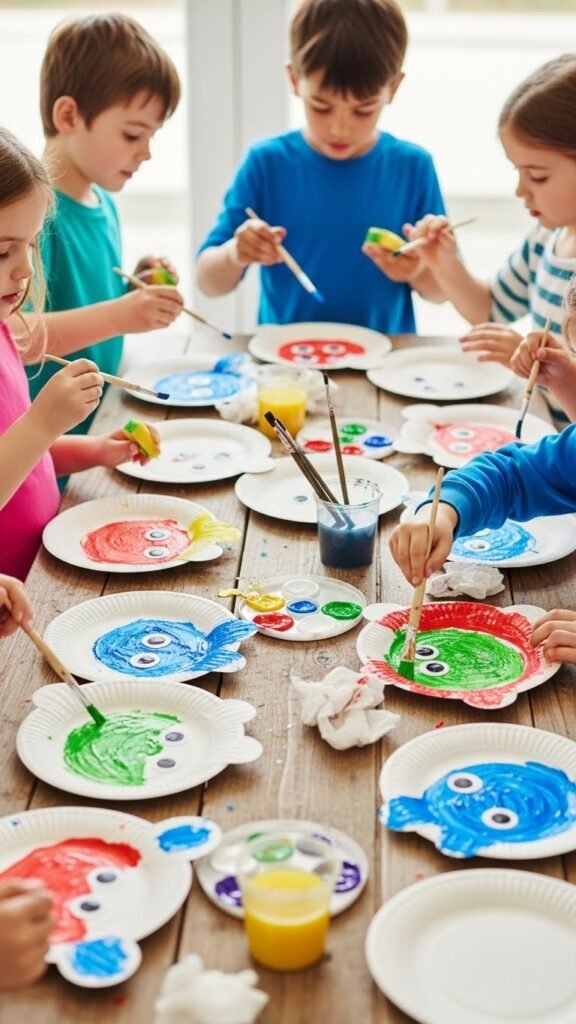
Paper plates are perfect for quick paint sessions. Start by letting kids choose an animal. Cats, lions, frogs, or bears work well. Use basic colors to cover the plate first. Let it dry for a few minutes.
Add details using smaller brushes. Eyes can be dots. Noses can be simple shapes. Whiskers can be lines. There is no wrong way to do it.
For a budget tip, use washable paint and reuse old brushes. You can also cut ears from scrap paper and glue them on later. This adds a craft step without extra cost.
Kids stay engaged because they see a face form fast. The shape guides them, which helps younger kids feel confident. Older kids enjoy mixing colors for fur or patterns.
Hang finished plates on a wall or fridge. Kids love seeing their animals displayed. This project works well for groups and short attention spans.
2. Sponge Shape Stamping
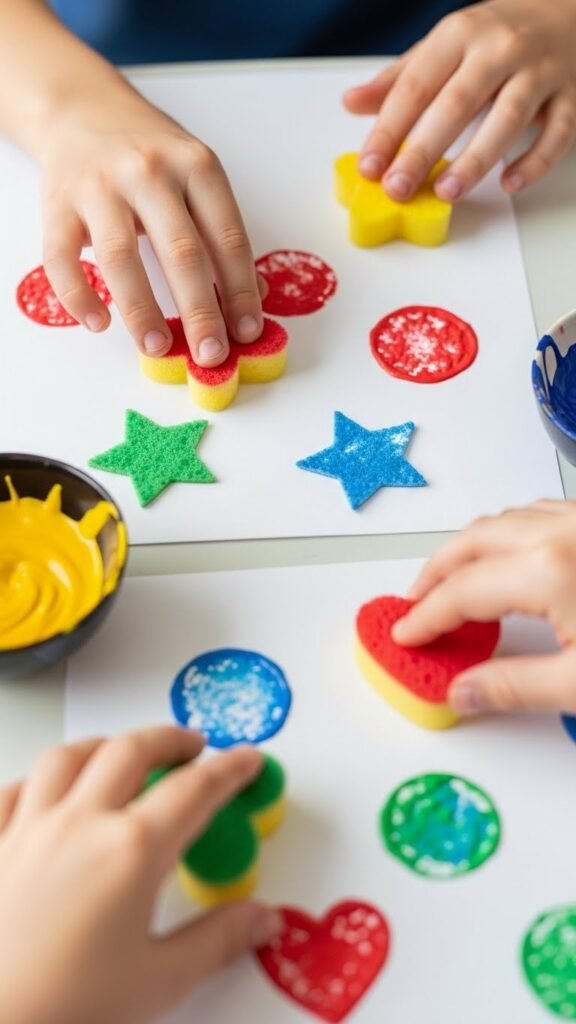
Cut kitchen sponges into simple shapes. Squares, circles, stars, and hearts are easy. Pour small amounts of paint onto paper plates.
Kids dip the sponge and stamp it onto paper. Patterns appear quickly. This keeps interest high because every press looks different.
Use scrap paper for practice. Then move to thicker paper once kids find a rhythm. Encourage color mixing by overlapping shapes.
This project uses very little paint. Old sponges work well. Clean up is quick with warm water.
You can turn stamped paper into wrapping paper, cards, or wall art. Kids enjoy seeing how something simple becomes useful.
Sponge stamping helps with hand control. It also feels playful and low-pressure. That keeps kids painting longer without frustration.
3. Balloon Bounce Painting
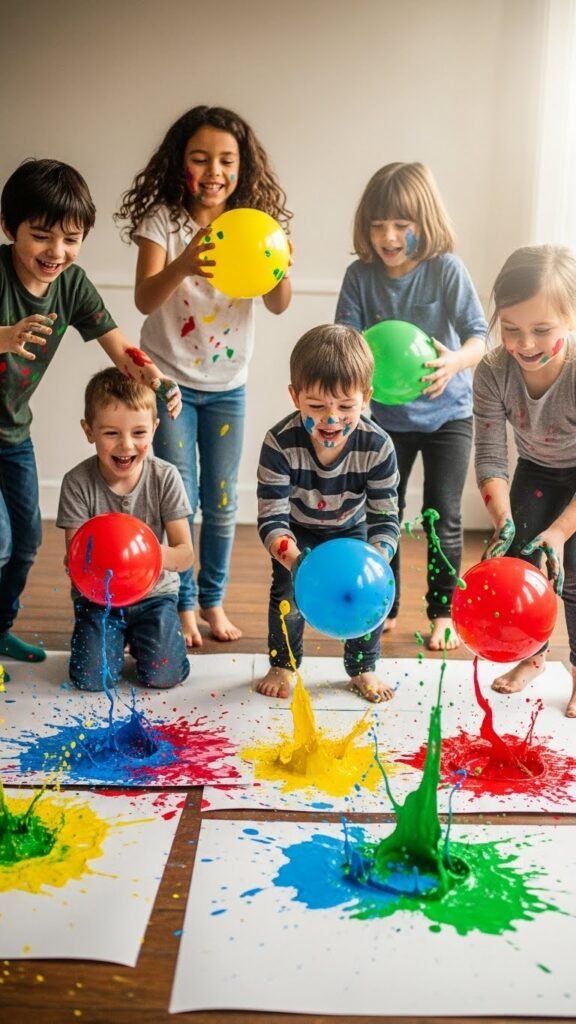
Blow up small balloons and dip them lightly into paint. Tape large paper to the floor. Let kids bounce or press the balloons onto the paper.
The movement makes this project exciting. Each bounce leaves a soft, round mark. Colors blend naturally.
Use only a little paint to avoid slipping. This keeps the space safe and manageable. Old sheets or newspapers protect floors.
This idea works well for kids who like motion. It turns painting into an active task. Short breaks help reset energy.
The results look abstract and bold. Kids feel proud even if they usually avoid art time.
Once dry, talk about shapes and colors together. It becomes both play and learning without feeling forced.
4. Fork Fireworks Painting
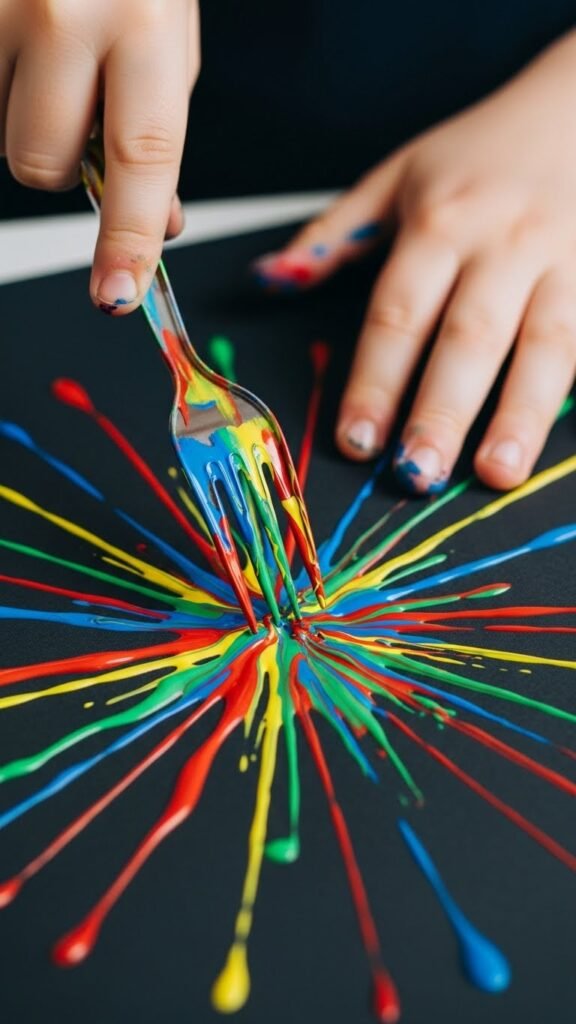
Plastic forks make great texture tools. Dip the fork into paint and drag it across paper. Lines spread out like fireworks.
Dark paper works well here. Bright paint stands out and feels dramatic. Kids enjoy the scratchy feel of the fork.
This project stretches paint far. A small amount covers a lot of space. That keeps costs low.
Show one example, then step back. Kids will invent their own patterns fast. Some may layer colors. Others may focus on one shade.
The quick results keep attention steady. Drying time is short.
You can turn finished pieces into greeting cards or frame them. Kids love seeing their work look “grown up.”
5. Q-Tip Dot Art
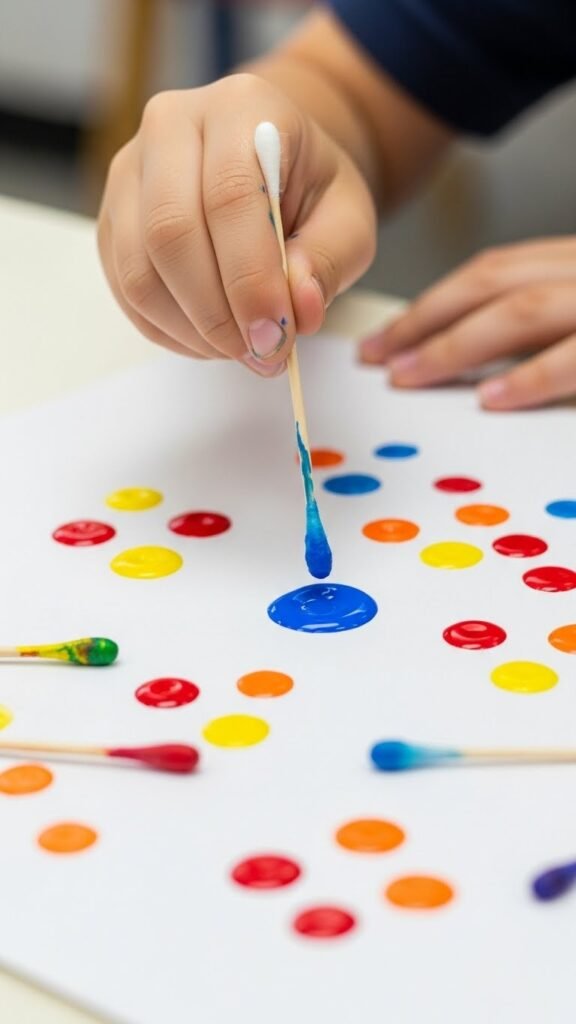
Q-tips are perfect for dot painting. Pour paint into small cups. Each color gets its own tip.
Kids tap dots onto paper. They can make patterns, shapes, or pictures. Flowers and bugs are popular choices.
This activity helps slow things down. The small motion keeps focus strong. It works well for calm time.
Use recycled paper for practice. Switch to cardstock for final art.
Dots dry quickly and look neat. Kids enjoy seeing clean results.
Store leftover Q-tips in a jar for next time. This project costs very little and fits many age groups.
6. Nature Leaf Printing
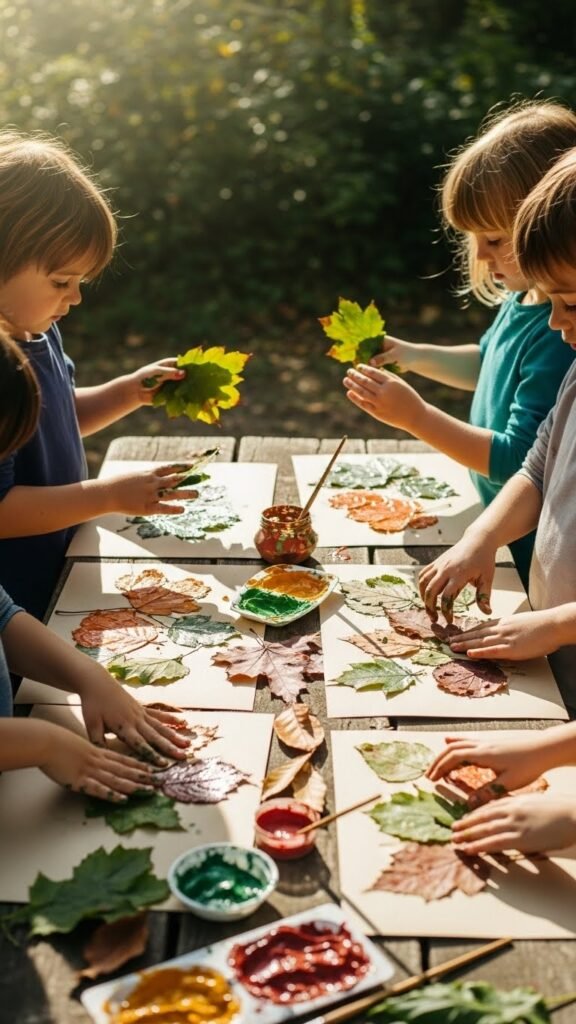
Collect leaves from outside. Choose ones with clear veins. Paint one side lightly and press onto paper.
Lift slowly to reveal the print. Kids love the surprise.
This project connects art with outdoor time. It feels calm and hands-on.
Use old paintbrushes or fingers to spread paint. Thin layers work best.
Talk about leaf shapes and sizes while painting. It adds learning without pressure.
Hang prints to dry or make a simple collage. Each leaf looks different, which keeps interest strong.
7. Toy Car Track Painting
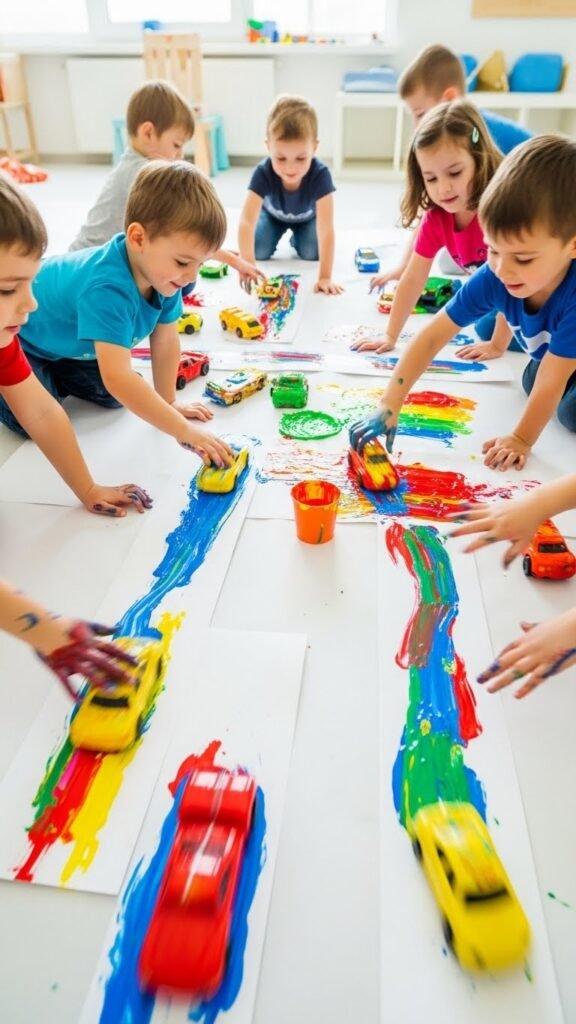
Dip toy car wheels into paint. Roll them across paper. Tracks appear right away.
This project mixes play and art. Kids who love cars stay engaged longer.
Tape paper to the table or floor. Long strips work well.
Use washable paint for easy cleanup. Old cars are fine.
Encourage kids to change directions and colors. Patterns form naturally.
Let cars dry afterward. Kids enjoy seeing paint-covered wheels as part of the fun.
8. Ice Cube Painting
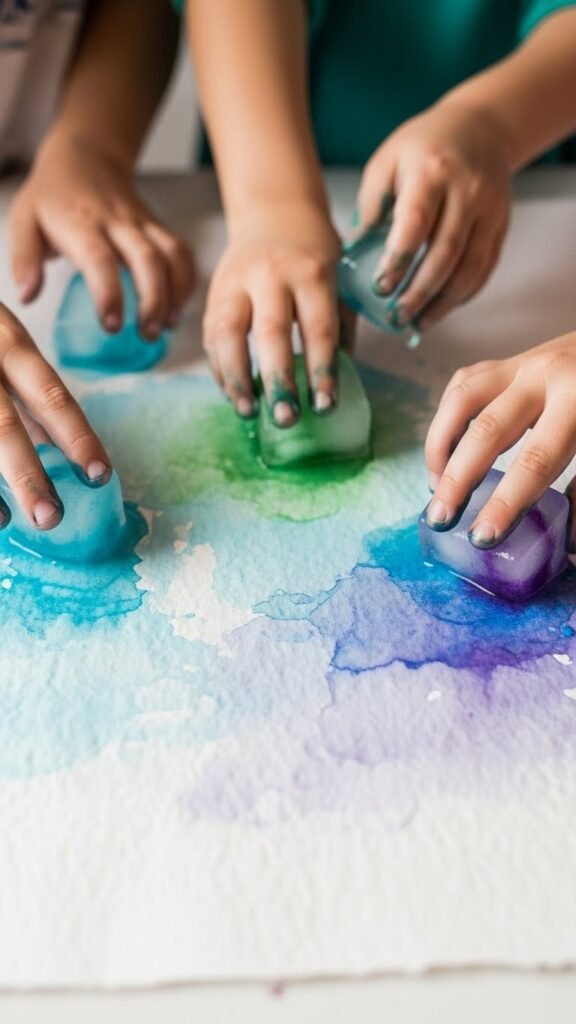
Freeze water mixed with a little paint in ice trays. Add popsicle sticks.
Kids slide the ice across paper. Color spreads as it melts.
This activity feels different and exciting. The cold adds interest.
Work on trays or outdoors to manage drips. Use thick paper.
Colors blend softly without effort. Kids enjoy watching changes happen.
This project works well on warm days and short sessions.
9. Rolling Marble Art
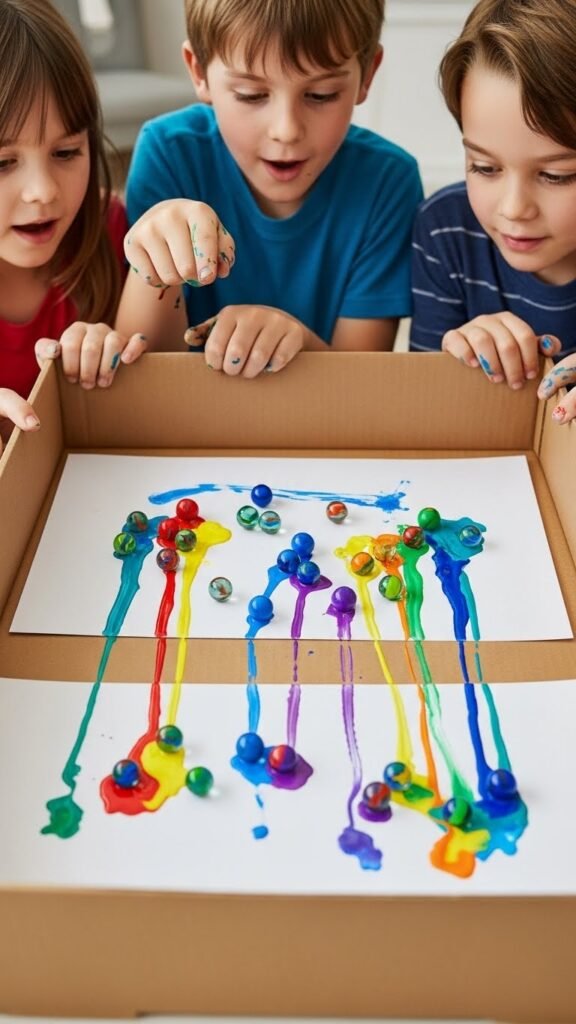
Place paper inside a shallow box. Dip marbles in paint and drop them in.
Kids tilt the box gently. Marbles roll and leave lines.
This feels like a game. Control and movement keep attention steady.
Use a few marbles at a time. Less mess, more focus.
Results look layered and interesting. No drawing skills required.
Reuse marbles after washing. This keeps costs low.
10. Handprint Tree Art

Paint kids’ hands brown and press onto paper for tree trunks. Add green fingerprints for leaves.
This project feels personal. Kids enjoy using their hands.
Washable paint makes cleanup easy. Keep wipes nearby.
Add simple backgrounds with sponges or fingers.
Finished art works well as wall decor or gifts.
Kids love seeing their hand size captured on paper.
11. Bubble Wrap Printing
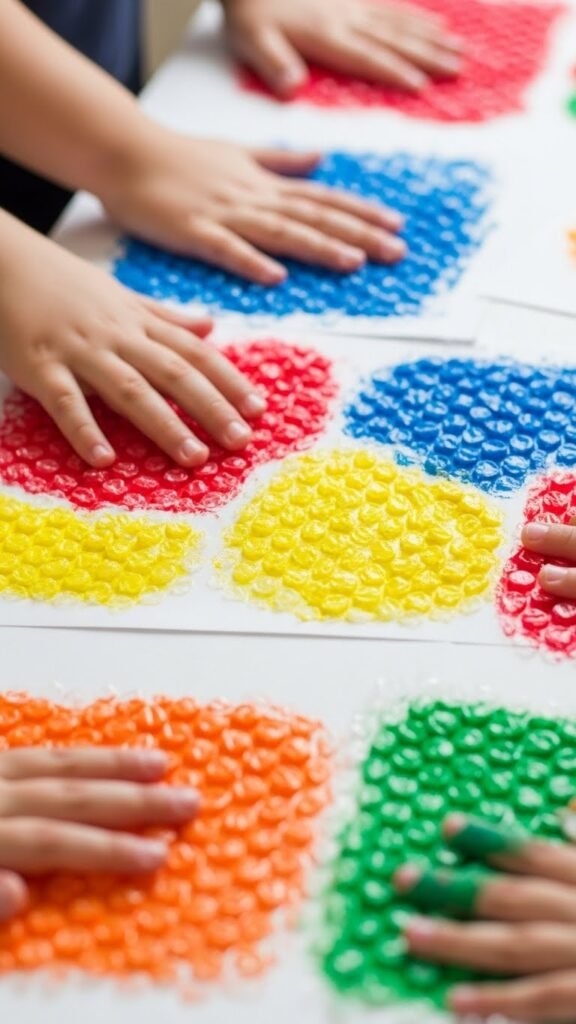
Bubble wrap creates instant texture. Dip it in paint and press onto paper.
Patterns appear right away. Kids enjoy the feel and sound.
Use scrap wrap from packages. Cut into small pieces.
Layer colors for depth. Let each layer dry briefly.
This project stays fun without instructions. Exploration leads the way.
12. Straw Blow Painting
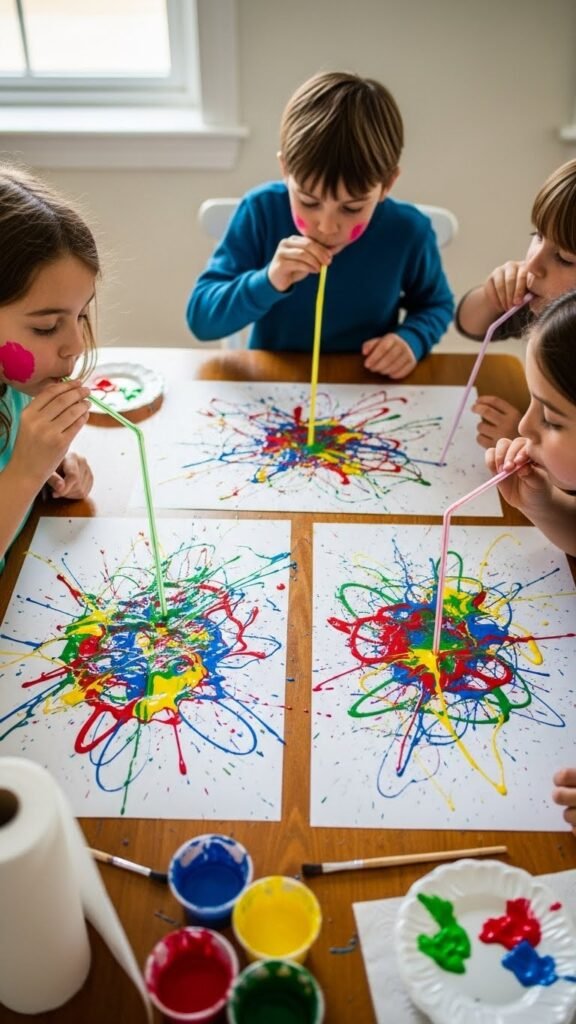
Drop watery paint onto paper. Kids blow through straws to move it.
Lines stretch in all directions. Results feel playful.
Remind kids to blow, not sip. Supervision matters.
Use thicker paper to handle moisture.
This project feels like a science experiment and art combined.
Short bursts keep energy balanced.
13. Masking Tape Line Art
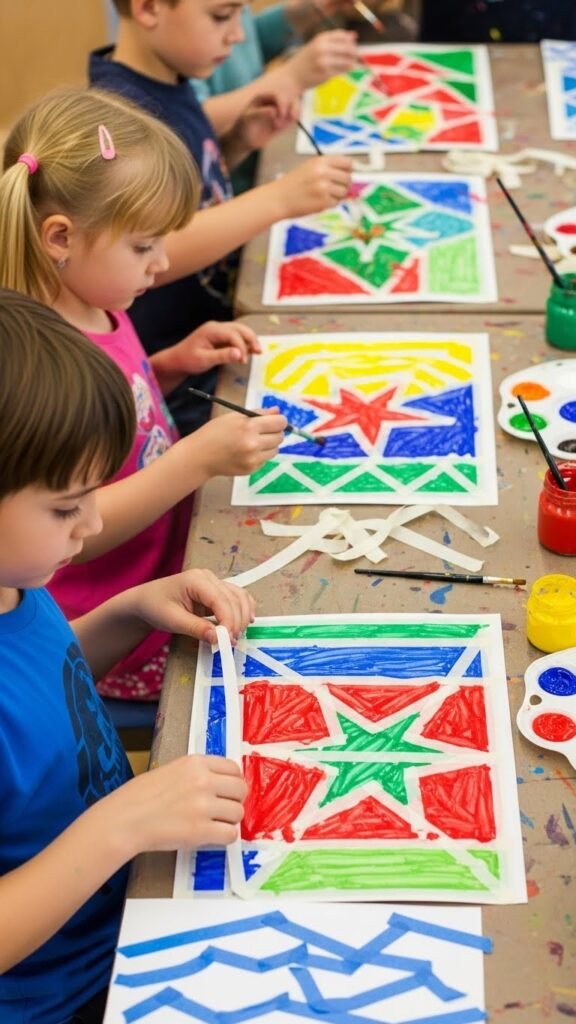
Tape simple lines or shapes onto paper. Paint over everything.
Once dry, peel tape to reveal clean paths.
Kids enjoy the reveal step. It feels rewarding.
Use basic tape and leftover paint.
Geometric designs appear with little effort.
This works well for older kids too.
14. Cotton Ball Clouds
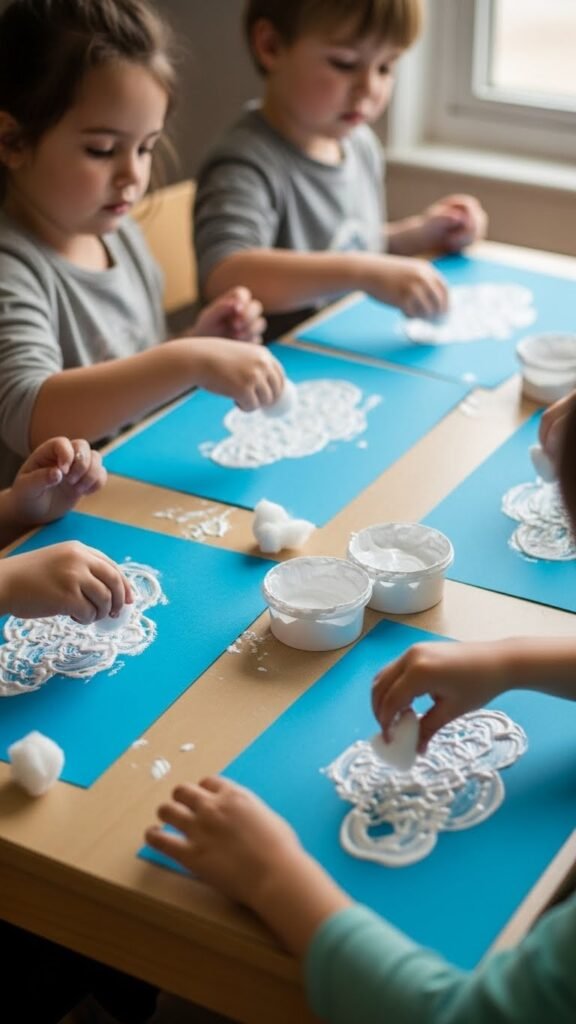
Dip cotton balls in white paint. Dab onto blue paper.
Clouds form easily. Soft texture keeps interest.
Clothespins help grip cotton balls cleanly.
Add simple skies or suns if kids want.
This project feels calm and gentle.
Great for quiet afternoons.
15. Rock Painting Basics
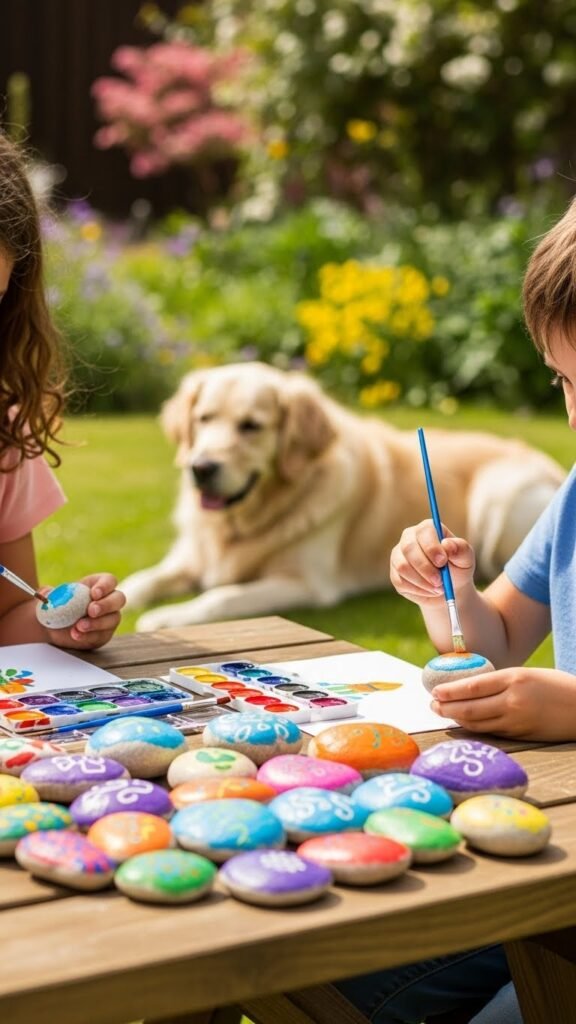
Collect smooth rocks. Wash and dry them.
Paint simple patterns or faces. Keep designs easy.
Use small brushes and limited colors.
Rocks dry fast and feel sturdy.
Kids enjoy holding finished pieces.
Display them in the garden or indoors.
16. Cardboard Box Painting

Large boxes invite big movements. Paint inside and out.
This works well for group play.
Use leftover house paint samples or craft paint.
Boxes become playhouses or forts later.
Painting feels like part of playtime.
Great for high-energy kids.
17. Water Painting Outside
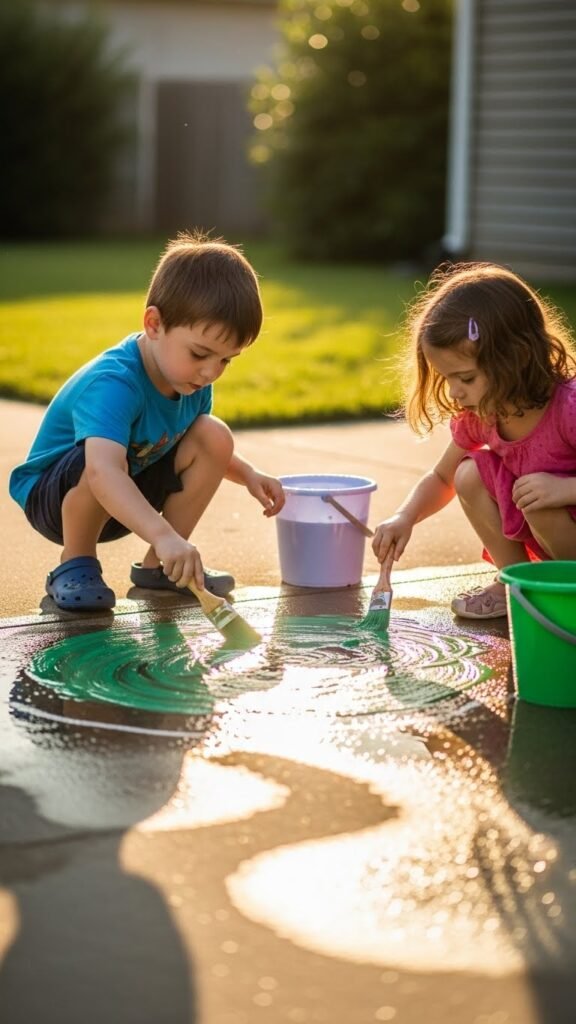
Fill buckets with water. Use large brushes.
Paint on pavement or fences.
Art disappears as it dries. Kids can repeat again.
No paint required. Zero mess.
Perfect for outdoor breaks.
Simple and calming.
18. Sticker Resist Painting
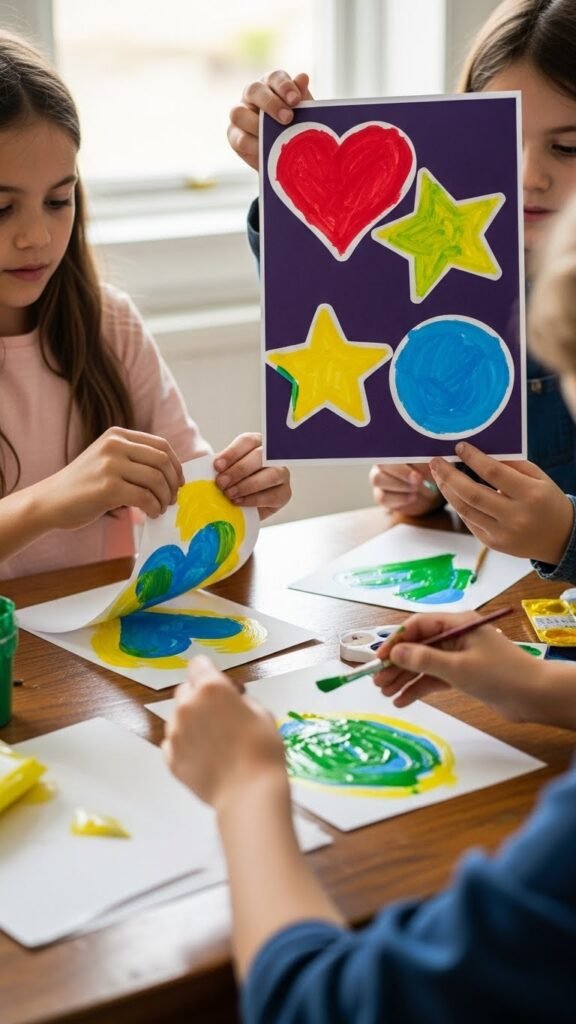
Place stickers on paper. Paint over everything.
Once dry, peel stickers off.
Shapes appear underneath.
Use any stickers on hand.
Kids enjoy the surprise.
This keeps focus through each step.
19. Salt Texture Painting

Paint shapes with wet paint. Sprinkle salt on top.
As it dries, texture forms.
Kids love watching changes happen.
Use table salt already at home.
Brush off extra salt later.
Results look interesting without effort.
20. Paint and Fold Prints
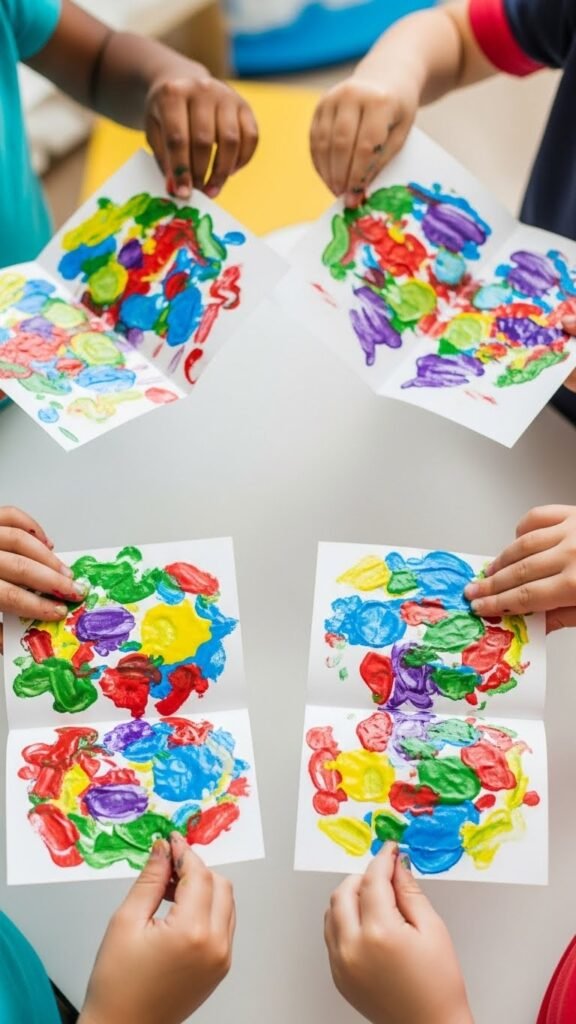
Paint one side of paper. Fold it in half.
Press gently. Open to reveal symmetry.
Each print looks unique.
This feels like a magic trick.
Use small amounts of paint.
Great for quick sessions.
21. Window Painting with Washable Paint
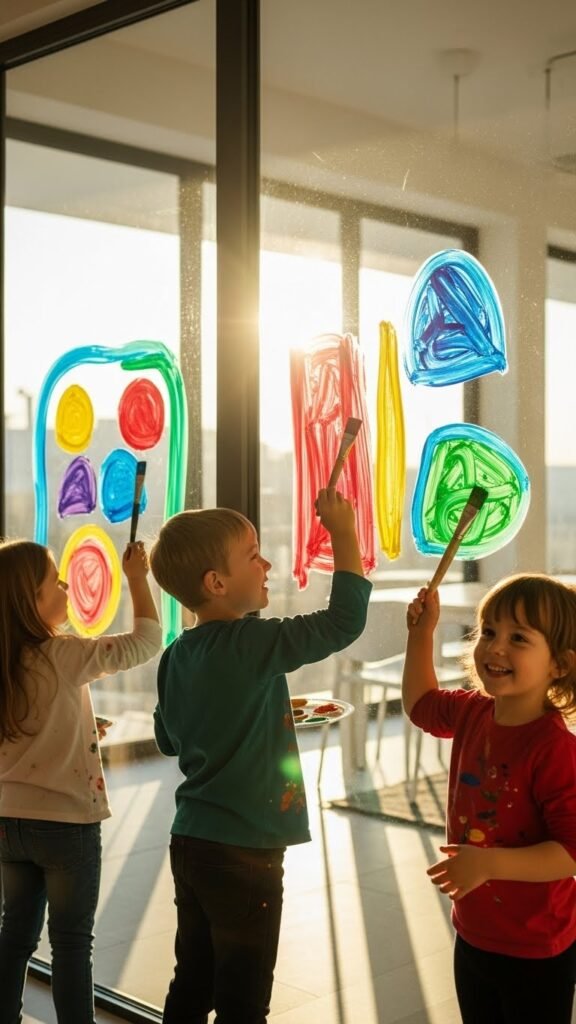
Use washable paint on windows.
Paint shapes, lines, or scenes.
Light shines through colors.
Clean up easily with water.
Kids enjoy vertical painting.
Works well on bright days.
22. Finger Paint Story Pages

Let kids finger paint scenes.
Ask them to tell a story about it.
No brushes required.
This builds focus and imagination.
Use thick paper and wipes.
Finished pages become storybooks.
Conclusion
Easy paint projects help kids stay busy while building confidence and creativity. These ideas rely on simple tools, small budgets, and flexible steps. You can repeat favorites or rotate new ones to keep interest strong. Set up a washable space, choose one project, and let kids explore color and movement at their own pace.

Leave a Reply